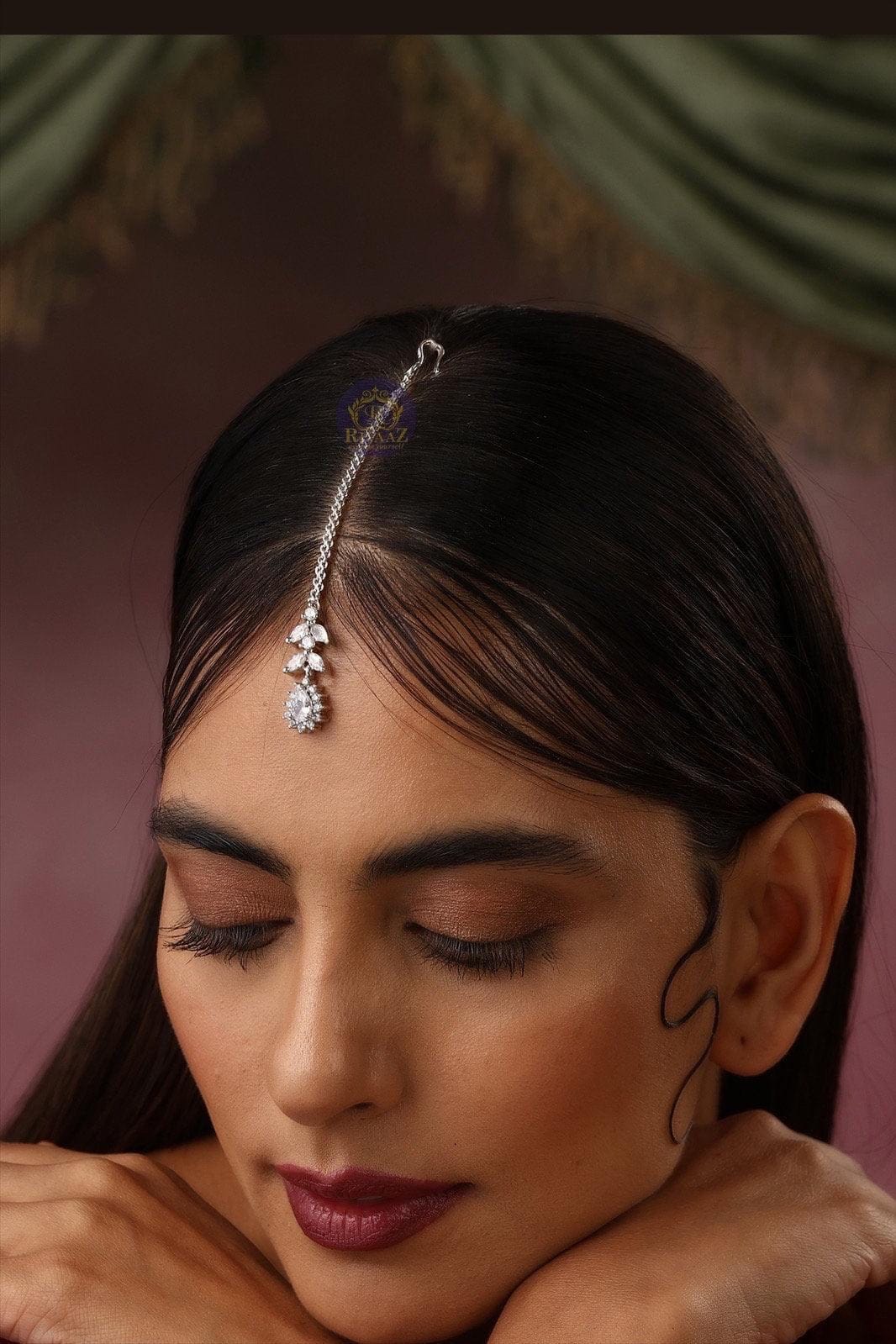


Indian Maang Tikka
Three Indian maang tikka designs are stocked with ruby matha patti, fine Kundan tikka, and the Nihi Navratan Bahubali set, where chains link the earrings into the hair. Each one ships from the USA and suits weddings, sangeets, and festive nights.
Filter
Product categories
Sort by:


Shop Indian Maang Tikka Online
Forehead jewelry is a small category at most stores, and this page keeps it tight. Three designs, each a different answer to the same question of what sits above the brow. The ruby mathapatti costs $40. The Nihi Navratan Bahubali set starts at $37 and brings earrings along with the tikka. The fine Kundan maang tikka is the costliest item here at $98. Shipping turns free at $99. Add the $40 mathapatti to the same order, and the cart rides past that line with head jewelry for two separate events. All three designs show as in stock today.
Our Indian Maang Tikka Styles Include
Each design on this page belongs to its own head jewelry branch. The ruby mathapatti is the damini style: a band that follows the hairline, with a drop falling to the center of the forehead, and at $40, it is the cheapest way to get a full bridal frame around the face. The fine Kundan maang tikka takes a more classic route. A single Polki pendant hangs from its chain. The polish is dull gold, muted next to the shine of most bridal metal, and the filter records a pushback closure. Then comes the Nihi Navratan Bahubali set. Earrings first, then thin chains that travel up over the temples and pin into the hair, with the traditional nine Navratan stone colors spaced along the length. It sells from $37, the lowest entry on the page.
How to Style Indian Maang Tikka
Hair first, outfit second, tikka last. Makeup artists keep that order on every booking. Once the parting is set and the dupatta pinned, they insert the hook, and nobody touches the head after that. Brides sit for the mathapatti near the end of the makeup slot. Guests get off easier. A Kundan tikka with small studs works on its own for a sangeet, no necklace at all, and the open neckline holds up fine on camera. Outdoor events bring wind into it. A hanging pendant swings on a breezy lawn, and the flatter mathapatti behaves better at a beach or garden wedding for exactly that reason. The Bahubali chains need pinned hair above the ears. Loose strands tangle in fine chain within the hour.
Frequently Asked Questions About Indian Maang Tikka
What is the difference between a maang tikka and a matha patti?
A maang tikka is a single pendant on a single chain, worn along the center of the head. A matha patti adds a band along both sides of the hairline. The $40 ruby piece on this page is a matha patti; the $98 Kundan piece is a tikka.
How does a maang tikka stay in place?
A hook at the chain's end slides into the parting and grips the hair there. On its own, the hook carries a light piece through an evening. For heavier designs, push a bobby pin over the chain from each side, spray the parting, then insert the hook. The first attempt rarely sits straight. Practice once at home before the event day.
What is a Bahubali earrings tikka set?
A set where fine chains connect the earrings to pins in the hair above the ears. The style took its name from film costumes and spread through sangeet and mehndi fashion. The Nihi Navratan version here starts at $37.
Which hairstyles work with a maang tikka?
Buns, braids, and center-parted styles. A low bun anchors the pins well, and the chain stays put through dinner and dancing. A permanent side parting is the one bad match. Many women with side parts skip the tikka and put that budget into earrings.
Can you wear a maang tikka without a necklace?
Yes. A tikka over bare collarbones works for daytime events, and many brides drop the necklace anyway when the blouse has heavy neck embroidery. The forehead piece does the work on its own. Jhumkas fill the gap when the ears look empty.