

Key Takeaways
-
Indian traditional jewelry holds a deep tie with the Indian culture.
-
Indian traditional jewelry comes in a huge variety of designs.
-
Indian jewelry follows a head-to-toe concept and has something for every part of the body.
-
Women of Indian origin or deep love for Indian jewelry must learn about the types to understand the pieces better and make their pick.
Indian jewelry pieces are an integral part of rituals, but are also worn in every day attires. However, they come in a huge variety, depending on the region from which they originate, ways of wear, and others.
Well, as a woman, part of the Indian culture, or just someone who shares a love for jewelry, it is essential that you learn about the different types of traditional jewelry of India. This is why our blog will help you learn more about the jewelry types, the story behind them, and might also help you in choosing a few pieces for yourself.
Traditional Indian Jewelry from Head to Toe
Traditional jewelry of India comes in a huge variety. They are of different types and designed to adorn the different parts of the body. This is why we have divided the Indian traditional jewelry depending on the part of the body where it is worn.
Head Ornaments
Primarily worn by brides, head and hair ornaments symbolize marital status and divine protection. These pieces often signify the awakening of the third eye, representing wisdom, spiritual focus, and transition to a new life.
Some of the head and hair accessories for women include:
Maang Tikka
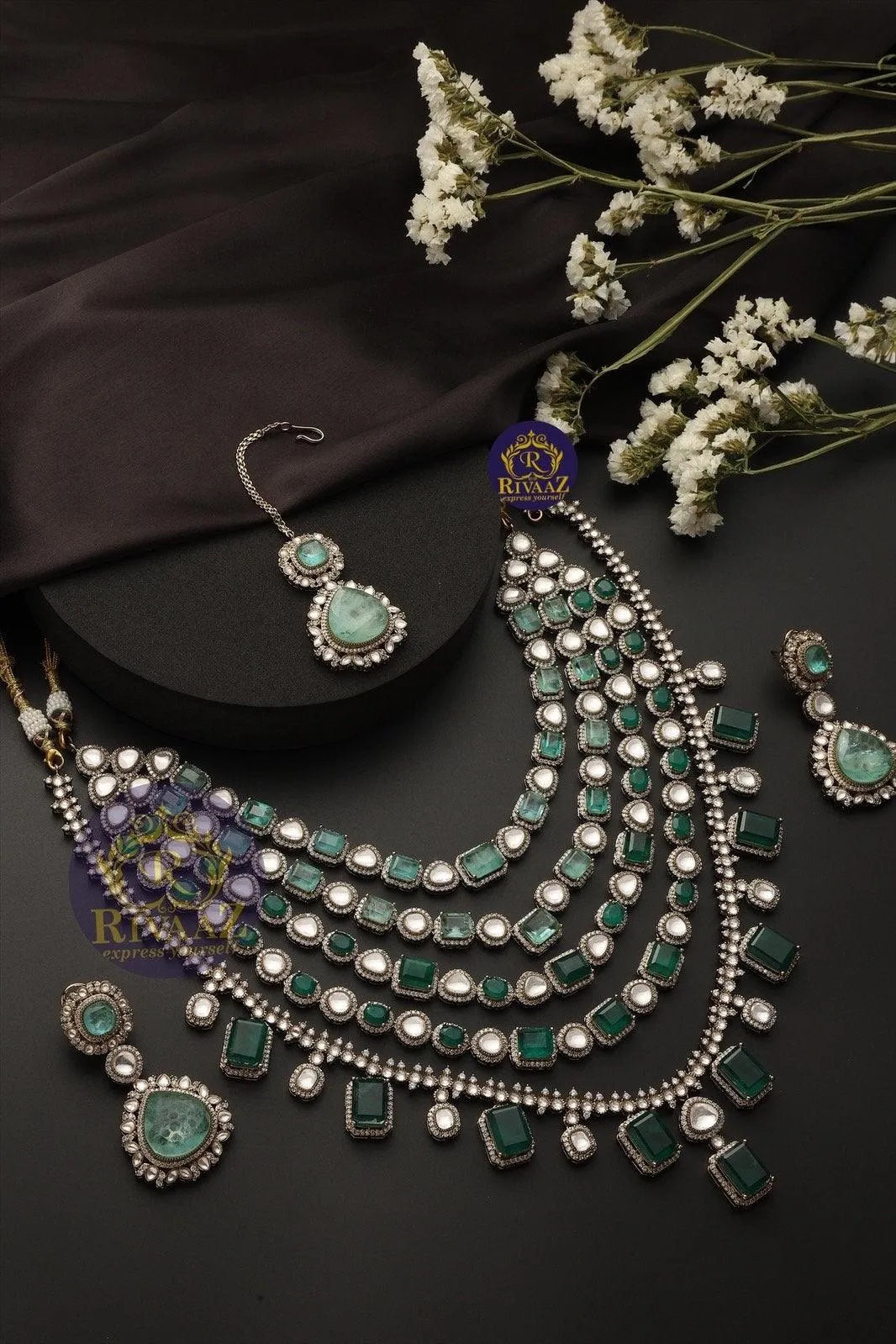
This Indian traditional jewelry is worn at the center of the forehead, adding a feminine touch to the face. Their design varies, while some include gemstones, some are in simple, solid designs.
Matha Patti
A matha patti perfectly frames the forehead and temple, and is often used with a maang tikka. This adds a royal elegance to the look and is widely used in North Indian weddings.
Jadanagam
This piece is famous in South India and includes hair chains with snake motifs. This traditional South Indian jewelry symbolizes prosperity and protection, common among brides of that region.
These pieces are often designed in silver and gold with a kundan and diamond setting. However, some women might also choose platinum designs.
Ears Accessories
Ear accessories have regional variations. But irrespective of where they are from, these are an essential part of traditional American Indian jewelry and carry both cultural and aesthetic importance.
Jhumkas
Jhumkas are the stars of Indian jewelry. These are bell-shaped earrings with a dome-like structure, which is set in a dangling form. This has a delicate look and symbolizes femininity.
Chandbalis
“Chand” in the Hindi language stands for moon. Just like the name suggests, these are moon-shaped earrings, which are typically large and crescent-shaped. These are often adorned with pearls for a delicate look.
Bali/ Hoops
These are circular, ring-shaped earrings that were originally designed in simple designs. However, now they also come studded with diamonds or cubic zirconia, in studded or loop form.
Kaan Pasha
The Kaan Pasha is an ornate, flat earring that covers the earlobe completely or partially, depending on its size. This piece is extremely popular in the eastern part of India, like West Bengal and Bihar.
Bugadi
This earring is particularly famous in Maharashtra and Gujarat, and is worn by women and sometimes even men in the regions. This is a distinctive and small earring that is worn on the upper helix of the ear.
Nose Adornments
Nose accessories are an important part of Indian traditional jewelry, which often symbolize femininity, fertility, and marital status. In some regional cultures, these are also said to honour Goddess Parvati and bring good fortune.
Some of the variations of nose accessories in the Indian wedding jewelry traditions are:
Naths
These are large hoops that often come with a long chain for support and aesthetic purposes. Naths are often designed with polki diamonds and even pearls, and are mostly worn by brides.
Nose Rings
Nose rings are also hoops, but are designed in much smaller designs. Although modern-day brides are sporting them at their weddings, these are generally for casual affairs.
Nose Pins
Noose pins, traditionally made out of gold or silver, are simple studs in intricate designs. These are worn by women for daily use or minimal styling.
Septum Rings
These nose rings are specifically designed to be worn in the center of the nose. This Indian fashion jewelry, a part of Indian wedding jewelry traditions, is famous across South India and is even a part of modern fashion trends.
Neck Ornaments
The neck ornaments are the stars of contemporary and Indian traditional jewelry. These frames one’s complete appearance, look stylish, and some pieces even signify marital status, prosperity, and cultural heritage.
Haar or Long Necklace
A Haar is a long necklace that is mostly worn by Indian brides. These are long, have a regal appeal, and extend below the bust. This is considered one of the statement pieces in a bridal ensemble and either comes in a solid design or intricately studded with gemstones and diamonds.
One of the most popular necklaces include emerald or ruby necklace or a Navratna necklace.
Chokers
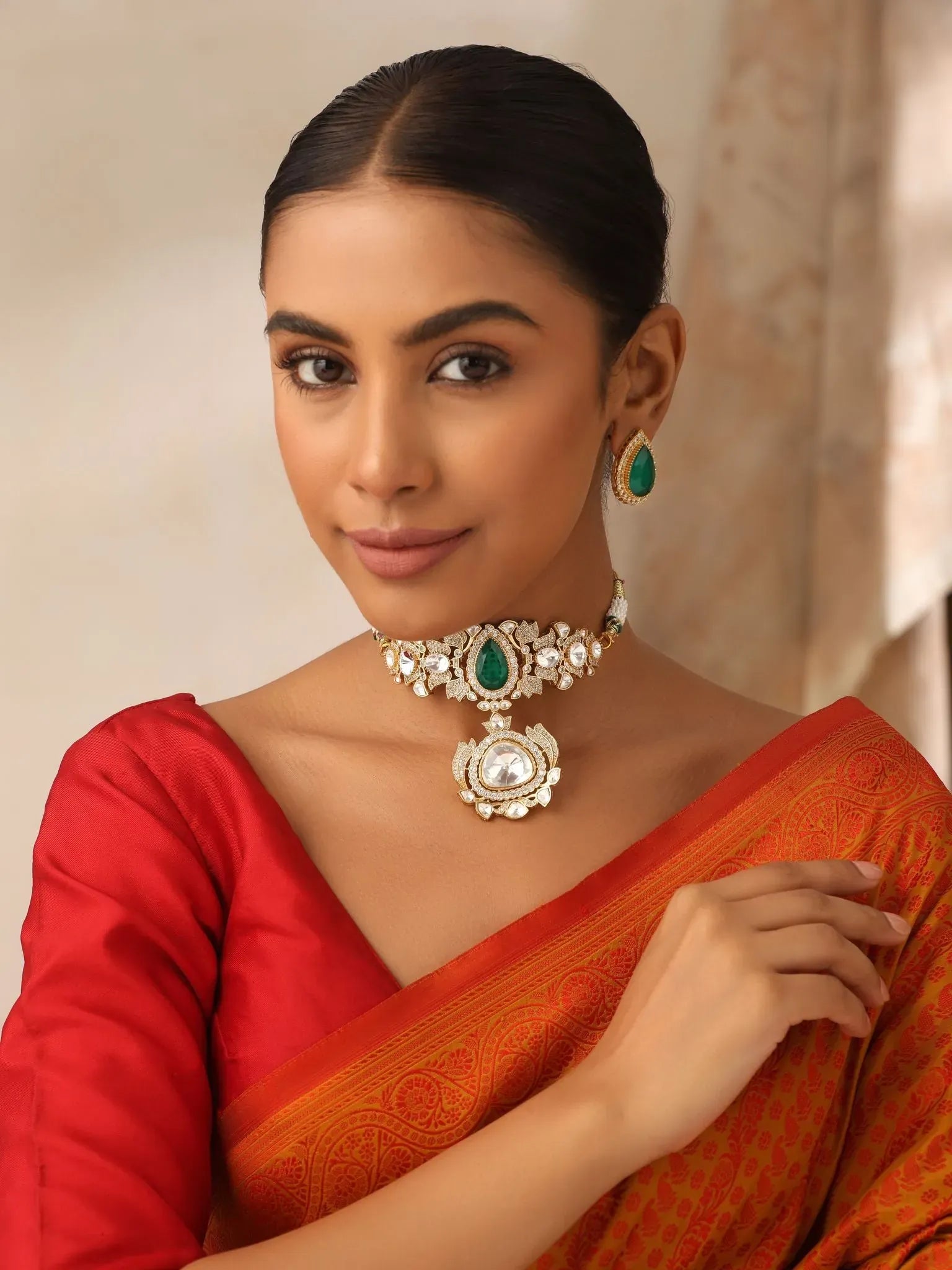
This is a tight-fitting necklace that often features an intricate design in Polki, Kundan, or even pearls. The choker sits directly on the neck and can be worn alone or layered with other neck ornaments.
Mangalsutra
This is a sacred symbol of marriage worn by a Hindu married woman. Mangalsutra traditionally used to come in black beaded gold chains with a small or big pendant in the middle. However, now these are also designed in elegant platinum, sleek yellow gold, or white gold alternatives with a few strategically-placed black beads and gemstone accents.
Hansuli/Hasli
This comes in a rigid, thick collar-bone necklace design that is quite famous in North India. However, it is also worn across India with a few design variations.
Hand Ornaments
Hand ornaments combine artistry and functionality. These come in different designs and enhance the overall elegance.
Kadas and Bangles
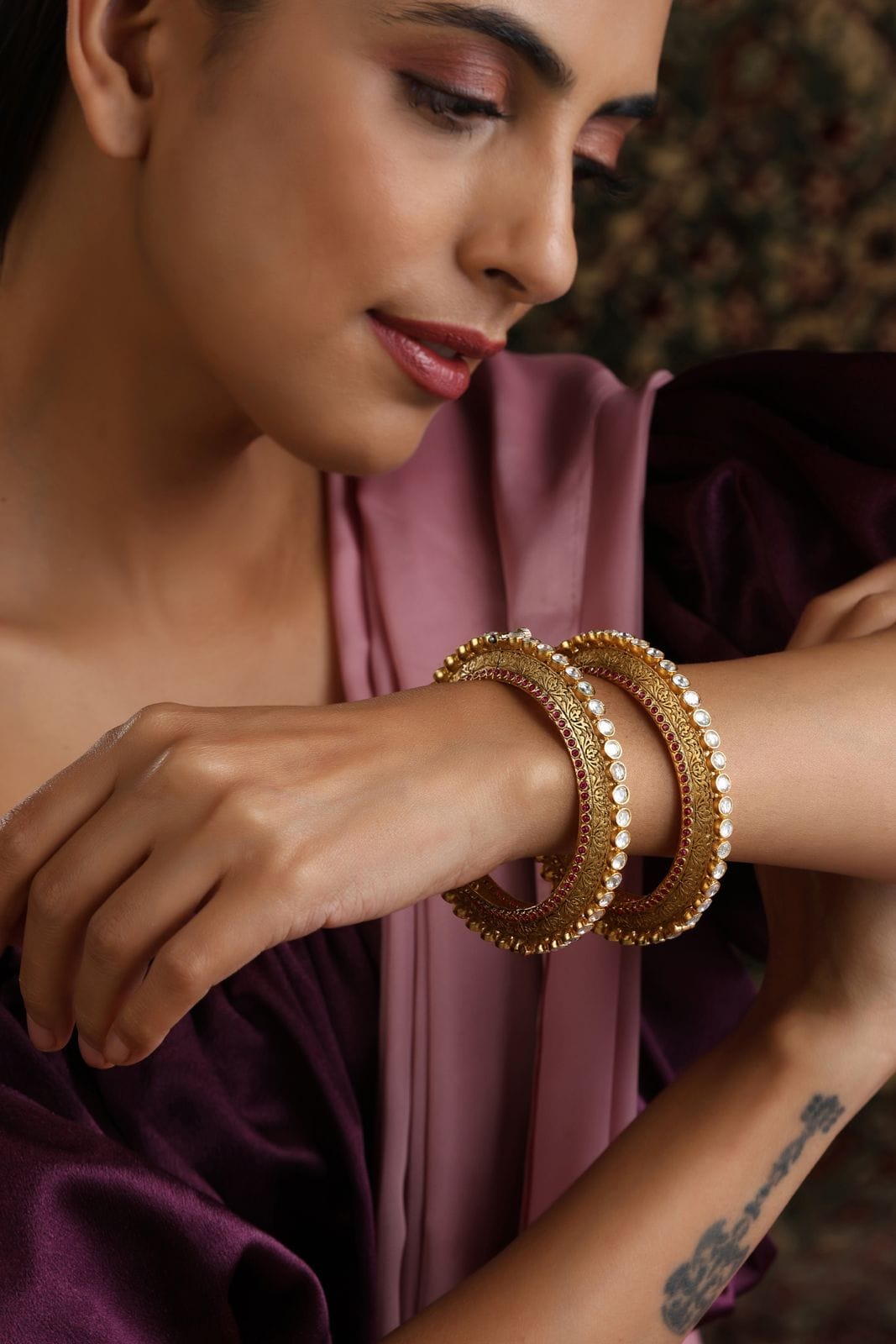
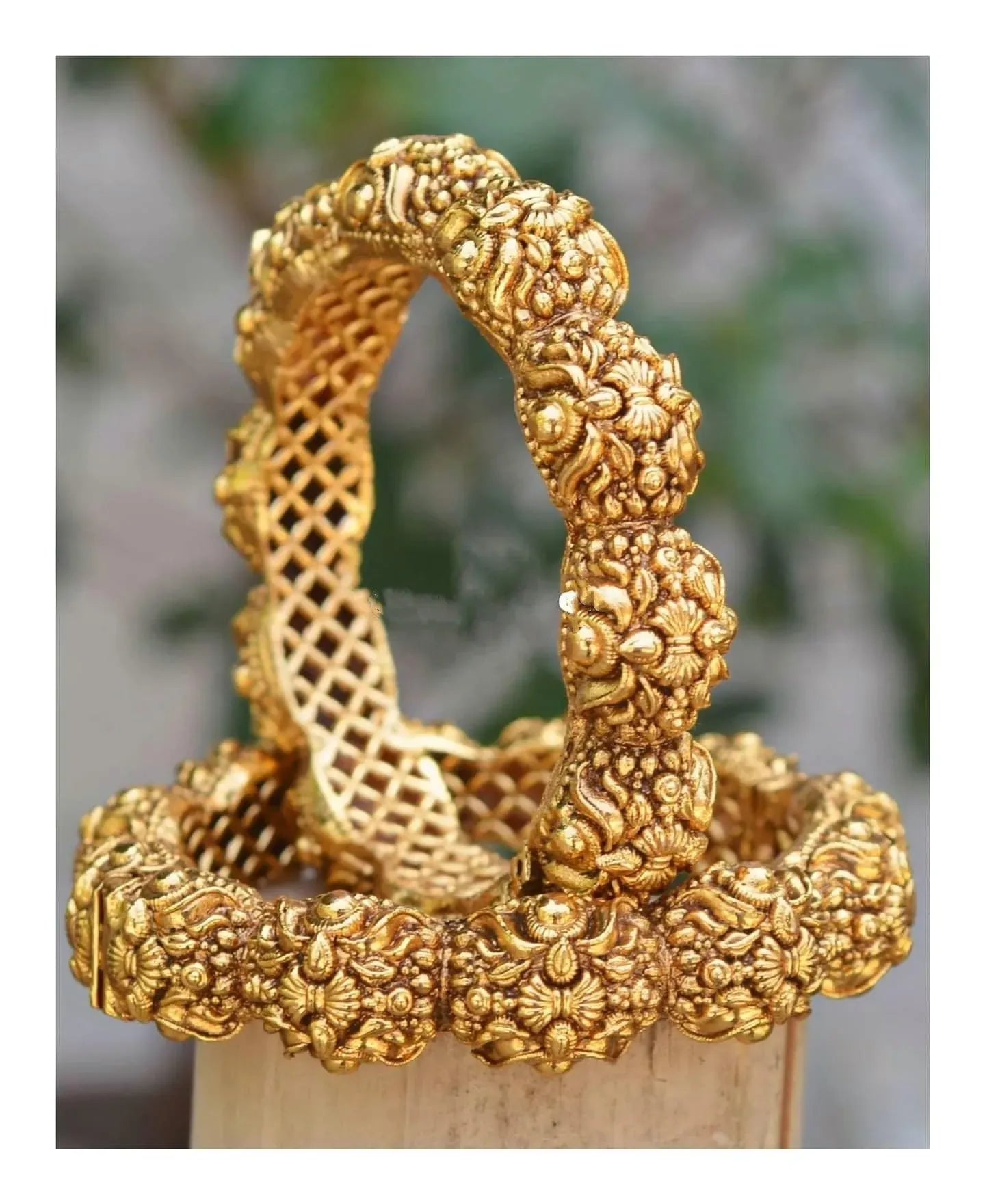
These arm ornaments range from thick and intricate designs to light and sleek pieces, depending on what one is comfortable wearing. They can be studded with gems or have intricate detailing with Meenakari. These are worn by all women irrespective of their marital status and add a delicate touch to the whole appearance.
Hathphool
These are a type of hand chains that connect rings to bracelets. These are often decorated with gemstones or delicate filigree work, which makes them look stunning. These pieces are more common among brides and enhance their femininity even more.
Bajuband/Armlets
Bajuband is worn on the upper arm to signify strength and beauty. These used to be widely worn by brides in Eastern India, but now they are only found in South Indian brides.
Rings
Rings are ornate and deeply rooted in Indian culture. These are generally designed from gold or silver and adorned with gems like diamonds, pearls, rubies, to name a few. These are worn by people across all ages and genders, irrespective of their marital status.
Waist Accessories
Waist accessories are worn mainly to accentuate one’s waist area. This adds a delicate and feminine touch and features an intricate, lightweight, and flexible design. These can either come in the form of a chain or a band, popularly known as Kamarbandh, which also helps in keeping the saree of the outfit in place.
Feet Ornaments
Ornaments for the feet are mainly worn by women on their wedding day. These are a subtle part of the entire look but hold deep significance in femininity and marital status.
Payal/Anklets
These are small, intricate chains or bands that are subtle sit on one’s ankle to accentuate the feet. Payal or anklets are mainly made out of silver, but in parts of South India, you will also find them in gold. These come with feminine charm and have small bells to add a musical touch with every movement that the woman makes.
Toe Rings/Bichiya
Toe rings are believed to have spiritual and health benefits in Ayurveda. Toe rings are traditionally worn by married women to symbolize marital status, femininity, and fertility.
Indian Traditional Jewelry and Its Allure!
Traditional jewelry of India stands as a testament to the country’s culture, art, heritage, and legacy. These pieces come in a huge variety, depending on where they are worn and where they originate from.
As an Indian woman or a fellow jewelry lover, this blog must have intrigued you about the different jewelry types. So, if you want to shop them, then make sure you explore our wide collection.
![7 Reasons to Add Indian Style Earrings to Your Jewellery Collection [Infographic]](http://www.myrivaaz.com/cdn/shop/articles/IMG_8681_19c8e235-ff66-47b5-9bdf-c17fe17e1314.webp?v=1782815297&width=896)